Pranava yoga is meditation on the sacred mantra Om, as outlined in the Upanishads, the Bhagavad Gita, and the Yoga Sutras of Patanjali. It is also called Aum yoga and Aum yoga meditation. It is, simply put, fixing the mind on the sound of the mantra “Aum” – the sacred syllable that both symbolizes and embodies Brahman, the Absolute Reality – as the mantra is constantly repeated in unison with the breath. The purpose of pranava yoga is to become free from suffering and limitation.
The purpose is well stated in the Upanishads: “What world does he who meditates on Aum until the end of his life, win by That? If he meditates on the Supreme Being with the syllable Aum, he becomes one with the Light, he is led to the world of Brahman [the Absolute Being] Who is higher than the highest life, That Which is tranquil, unaging, immortal, fearless, and supreme.” – Prashna Upanishad 5:1,5,7
The mantra Aum
Aum, according to Hindu philosophy, is the primordial sound from which the whole universe was created. Aum, also called the Pranava, is the original Word of Power, and is recited as a mantra. A mantra is a series of verbal sounds having inherent sound-power that can produce a particular physical or psychological effect, not just something that has an assigned intellectual meaning. The word mantra derives from the Sanskrit expression ‘mananaath thraayathe’ which loosely means “a transforming thought”; literally, “that which, when thought, carries one across [the worldly ocean of sorrow]”. The power of a mantra lies in its ability to produce an objective, perceptible change in the yogi who repeats it correctly.
In the yoga tradition, Aum is the most sacred of holy words, the supreme mantra. Aum is also called the Pranava, a Sanskrit word which means both controller of life force (prana) and life-giver (infuser of prana). “That which causes all the pranas to prostrate themselves before and get merged in the Paramatman, so as to attain identity with Him, is for that reason known as the Pranava.” – Atharvashikha Upanishad 1:10a.[1] Aum is called the Shabda Brahman – God as Sound/Vibration. According to yoga theory, the universe has emanated from this primal movement in God. By following the thread of Aum back in meditation to more and more subtle levels of awareness, the yogi regains union with Brahman.
The Upanishads
The Upanishads (both the major and minor) are full of references to Aum and meditation on Aum. Below is a small sampling:
- "He who utters Om with the intention ‘I shall attain Brahman’ does verily attain Brahman." - Taittiriya Upanishad 1.8.1
- "The Self is of the nature of the Syllable Om...Meditate on Om as the Self" - Mandukya Upanishad 1.8.12, 2.2.3)
- "The form of meditation that came to manifest as the foremost of all, for the regeneration of all seekers, was the First Word, indicative of Brahman [God]: the Syllable Om. Meditation on Om should be resorted to by seekers after liberation. This Syllable is the Supreme Brahman." – Atharvashikha Upanishad 1:1,2
- "God is the Syllable Om, out of Him proceeds the Supreme Knowledge." – Svetasvatara Upanishad 4:17
- "Om is Brahman, the Primeval Being. This is the Veda which the knowers of Brahman know; through it one knows what is to be known." – Brihadaranyaka Upanishad 5.1.1
- "One should meditate on this Syllable [Om]." – Chandogya Upanishad 1.1.1
- "The Syllable Om is the bow: one's self, indeed, is the arrow. Brahman is spoken of as the target of that. It is to be hit without making a mistake. Thus one becomes united with it [Brahman] as the arrow becomes one with the target." – Mundaka Upanishad 2.2.4
- Katha Upanishad 1.2.15, 1.2.16, 1.2.17
Bhagavad Gita
Speaking from the perspective of the Infinite Being, enumerating his major manifestation-embodiments, Krishna says: "I am the syllable Om."(Gita 7:8) He also says the same thing in 9:17 ("I am...the sacred monosyllable") and 10:25 ("Among words I am the monosyllable Om").
What to "do" with aum is then outlined by Krishna: "Engaged in the practice of concentration... uttering the monosyllable Om--the Brahman--remembering Me always, he...attains to the supreme goal. I am easily attainable by that ever-steadfast Yogi who constantly and daily remembers Me."– Bhagavad Gita 6:13; 8:12-14[5]
Yoga Sutras of Patanjali
Yoga Sutras of Patanjali | ||
|---|---|---|
| Pada (Chapter) | English meaning | Sutras |
| Samadhi Pada | On being absorbed in spirit | 51 |
| Sadhana Pada | On being immersed in spirit | 55 |
| Vibhuti Pada | On supernatural abilities and gifts | 56 |
| Kaivalya Pada | On absolute freedom | 34 |
Patanjali’s Yoga Sutras, the most ancient and authoritative text on Yoga, outlines the purpose and process of yoga as follows:
"Ishwara [God] is a particular Purusha [Spirit, Person] Who is untouched by the afflictions of life, actions, and the results and impressions produced by these actions. In Him is the highest limit of omniscience. Being unconditioned by time He is teacher even of the ancients. His designator [vachaka] is the Pranava [Om]. 37 Its japa [constant repetition] and bhavanam is the way [or: should be done]. From it result [come] the disappearance of obstacles and the turning inward of consciousness. Disease, languor, doubt, carelessness, laziness, worldly-mindedness, delusion, non-achievement of a stage, instability, these cause the distraction of the mind and they are the obstacles. [Mental] pain, despair, nervousness, and agitation are the symptoms of a distracted condition of mind. For removing these obstacles [there should be] the constant practice of the one principle [the japa and bhavanam of Om]." – Yoga Sutras of Patanjali 1:24-32
Soham or Sohum (सो ऽहम् so 'ham or so 'Hum) is a Hindu mantra, meaning "I am She/He/That" in Sanskrit.
In Vedic philosophy it means identifying oneself with the universe or ultimate reality.
The mantra is also inverted from so 'ham (the sandhi of saḥ + aham) to ham + sa. The combination of so 'haṃ haṃsaḥ has also been interpreted as "I myself am the Swan", where the swan symbolizes the Atman.
We all suffer from anxiety, unresolved problems and situations without apparent exit but the truth is that there is a solution for every problem and we just need to desire to find it.
Soham is an easy meditation that can help us open our mind towards the world and perceive the events in a different way.
The best part of it is that everyone can practice this meditation, regardless of how advanced he or she is in meditation practices.
What is Soham?
Soham is considered to be a breathing mantra because “So” is the sound of inhalation and “Ham” – that of exhalation.
If you don’t believe it, you can check it with a simple experiment. Listen to the sound of your own breathing and hear the sound you make when inhaling and exhaling. You will find out that when you inhale there is a sound that sounds very much like “Sooo”, and when you exhale the sound reminds of “Haaam”.
Apart from a breathing mantra, Soham is also a mantra aiming at the definite mind concentration. It is usually used in pranayama techniques but actually every person repeats it unconsciously with every breath taken. If you learn to listen to your own breathing and to focus on yourself, it shall be much easier for you to find your way to your Kama, Dharma and Artha.
What is particular about Soham meditation?
According to some sources, Shiva himself was the one who gave this mantra to people and repeating Soham the human being can merge with Shiva and his pure mind.
This meditation is different from other meditation techniques. It involves saying the Soham mantra which means “I am” or “I am the Universe”. That is how practitioners invest in this simple phrase the meaning that represents the best their own understanding.
People who practice Soham meditation regularly start feeling stronger the connection between their internal masculine and feminine principles, the union of Shiva and Shakti. But it is even more important that they gain internal purity, concentration and peace which bring them closer to their liberation, or Moksha.
Soham is a universal meditation method which doesn’t require long training. It doesn’t take long and only involves your wish to practice and… breathing.
Breathing is how one gets rid of all accumulated emotions and questions that bother him, of choices pending to be made, of self-pity, silent laments and sorrows, uncried tears… everything that takes your breath away and prevents you from sleeping all night long.
Inhaling and exhaling not only releases accumulated stress and tension. Improving the technique leads to enlightenment, immediate finding of solutions for important issues. That’s how you can see yourself from an external point of view and get closer to fulfilling the aims that are universally important – Dharma, Kama, Artha, and supreme one – liberation or Moksha.
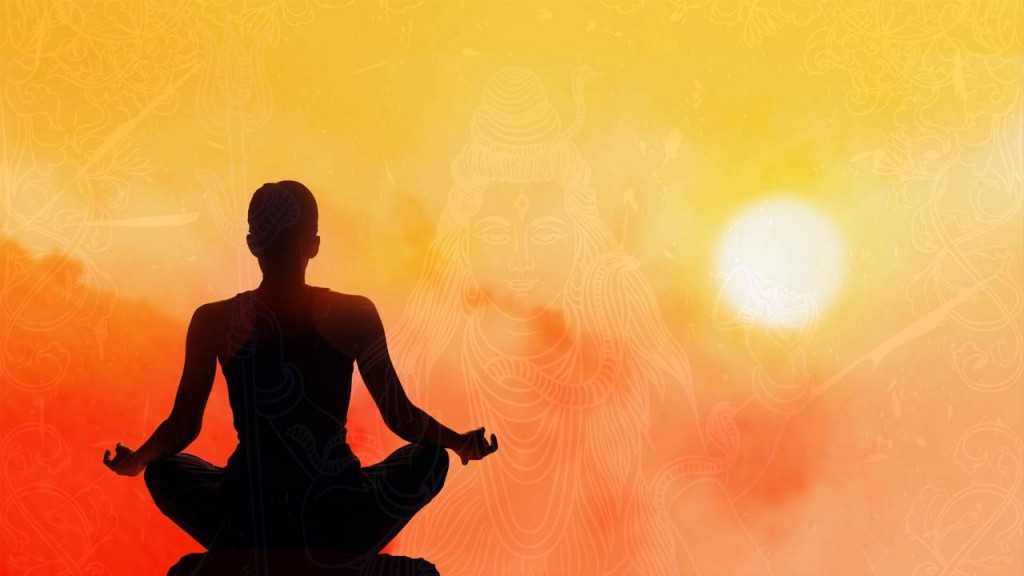
You don’t need any special preparation for this meditation. You just have to find a calm corner at home, make yourself comfortable and relax.
Ask your family not to bother you for a while, sit or lie down comfortably.
Try to focus exclusively on yourself and to detach your mind from everything around (speech, movements, noises, music).
Imagine three circles around you and make the decision for your mind not to cross them and not to let any thoughts or sounds to penetrate those circles and reach your mind.
If it results hard for you to ignore the surrounding noise, a simple trick can help you in the beginning – use earplugs (until you learn to ignore what can be heard around you).
Relax completely and focus only on your breathing. Breathe through your nose. Do it naturally and try not to control the inhaling and exhaling. Just breathe in and out, in and out. Listen to the sound you produce inhaling and exhaling and you will hear “Sooo” when breathing in and “Haaam” when breathing out.
Sooo – Haaam, Sooo – Haaam
In the beginning you won’t be able to settle the numerous thoughts scrambling in your head. But don’t worry, it is impossible to free your mind from all thoughts immediately. Continue inhaling and exhaling while repeating the Soham mantra and you will gradually start feeling the relaxation and purification of your mind and calmness shall prevail.
Now try breathing in slightly faster and breathing out slightly slower. Use your diaphragm to breathe and try focusing on the middle of your stomach where all the air is accumulated.
Don’t try to control your breathing in any way, just continue breathing without any unnecessary pauses. Keep repeating the mantra in your mind.
Relax your body with every inhalation and exhalation. Try to focus only on your breathing and feel its rhythm.
Focus on your stomach, near the navel, and feel how air goes from your navel to your nostrils and backwards.
Feel your breath along your spine and the fibres of your body relax. All anxieties and problems go away from your mind and your thoughts.
Focus only on yourself and follow the rhythm of breathing in and out to feel your breath touching the nostrils and passing through them. Feel your breath passing through both of your nostrils.
Now try to produce the sound of inhalation and exhalation. Say “Sooo” breathing in and “Haaam” breathing out. Breathe steadily through both nostrils, don’t pause and repeat the Soham mantra with each inhalation and exhalation.
In a few minutes you will feel how breathing in and out becomes one with the sound. Continue repeating the mantra.
Feel the spot where the nasal septum finishes and the upper lip starts. Put your tongue close to the palate to feel the spot better.
Inhale as if through the spot under the nasal septum and you will feel a slight energy stream that shall focus in the area between your eyebrows. Exhale in the opposite direction.
You will gradually start feeling the sound, your mind and your energy joining in a common stream. This stream is what is referred to as breathing through Sushumna channel (Sushumna is a passage between emptiness and the new beginning, the conceiving of new life or new condition).
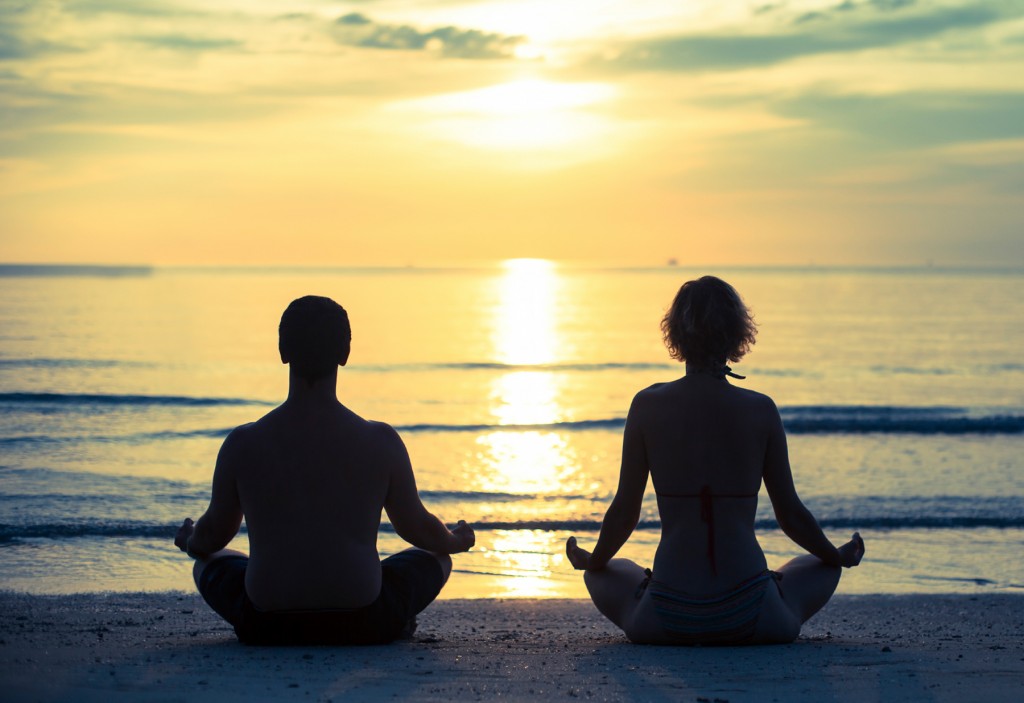
Stay completely relaxed, do not think about anything, just feel the flow of the stream through Sushumna channel.
Make a lake of silence out of your mind, a completely still lake without any sign of waves. Devote to the silence completely at least for a minute and try not to let any thought come to your mind. Let the only motion of the still surface of the lake be the mantra you are repeating while breathing in and out.
You might start meditating for a few minutes and increase the duration gradually. It only depends on you and your need to be alone with yourself.
Meditate early in the morning while the outer world is still sleeping or late at night when the daily fuss is over.
After finishing the meditation, stay relaxed with your eyes closed for a couple of minutes.
While meditating you will find out that there is a balance in everything in the world. Breathing process is composed by ups and downs. That is valid for other vital processes as well. You will realize that all events or situations you take part of consist of beginning, progress and ending, and that every problem has different potential solutions, some of them contradictory. You will start understanding different points of view and you will eventually reach complete balance.
Your opinions and understanding of reality shall broaden and embrace larger and more general dimensions. You will reach enlightenment regarding your Dharma, Kama and Artha.
It is hard to say it in words but these enlightenments choose their own paths. They come in the shape of knowledge acquired through experience.
Soham meditation shall help you connect to an endless source of energy capable of reestablishing your internal balance, to heal you physically and to direct your life giving a meaning to everything that is happening around and inside you.
Human mind consists of conscious and unconscious parts. According to yoga tradition, our actions are related to our mind through the process of breathing. Breathing is a bridge between the mind, the body and the actions it undertakes.
Soham meditation is a direct way to influence our actions and to transform our mind. It is indeed the most direct and shortest way which uses breathing as a main method.
The natural course of the meditation unites So (life energy) with Ham (the Ego, the limitations of the self). This is the meaning of Soham meditation. The breathing gives life. Breathing So in, you fill yourself with energy and breathing Ham out, you expulse your Ego and your limitations.
Correct Soham meditation joins the individual with the universal cosmic mind. You will exceed the thinking process, while space, time and any other limitation disappear.
Your mind shall be empty and once empty it will expand. You shall start perceiving the world in a different manner, you shall reach enlightenment and find your direction, the way you need to follow towards the four vital goals – Dharma (your duty), Kama (your wishes), Artha (security and wealth) and Moksha (liberation).

No comments:
Post a Comment